Why broth sets in the fridge
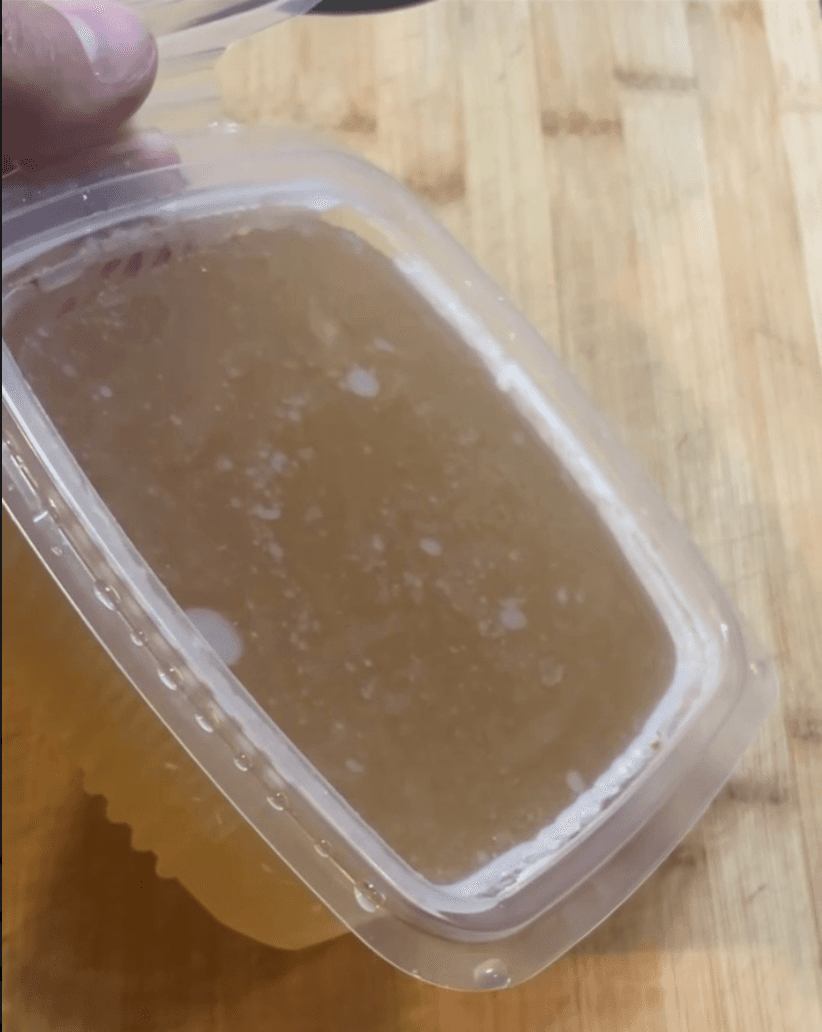
Cold Bò broth can be firm enough to scoop. Watch a spoonful melt in a warm pan and you’ll see what gelatin does. The same broth that sets in the fridge can give a cup body or turn the juices in a pan into a sauce.

From the spoon to the saucepan
During simmering, collagen from connective tissue turns into gelatin. As the broth cools, the gelatin forms a soft gel that holds water. Gentle heat loosens that structure again: the very same broth becomes liquid in your cup.
Spoon the chilled broth into a small saucepan and warm it gently, stirring as it melts. Add hot water a little at a time if you prefer a lighter cup. For a sauce, use it as it is and let it reduce in the pan.
Temperature and concentration both affect how firmly broth sets. A softer or firmer gel can be perfectly normal; texture alone does not tell you how many grams of protein a portion contains.
What sleep researchers studied
Glycine is one of the amino acids found in gelatin. In a small sleep study, volunteers took three grams of isolated glycine before bed. The researchers measured sleep and asked participants how they felt the next morning. A cup of broth contains a mixture of amino acids, and the amount of glycine varies with the recipe and the finished broth.

Products in this story

Updated · Alexander Pichugin